Descripción
# Información del producto
Tipo de obra: Reproducción pintada a mano
Técnica: 100 % pintado a mano
Técnica / Soporte: Pinturas al óleo sobre lienzo de lino
Formato del producto: Lienzo montado (listo para colgar)
Tipo de gestión de pedidos: Por encargo
# Obra de arte original
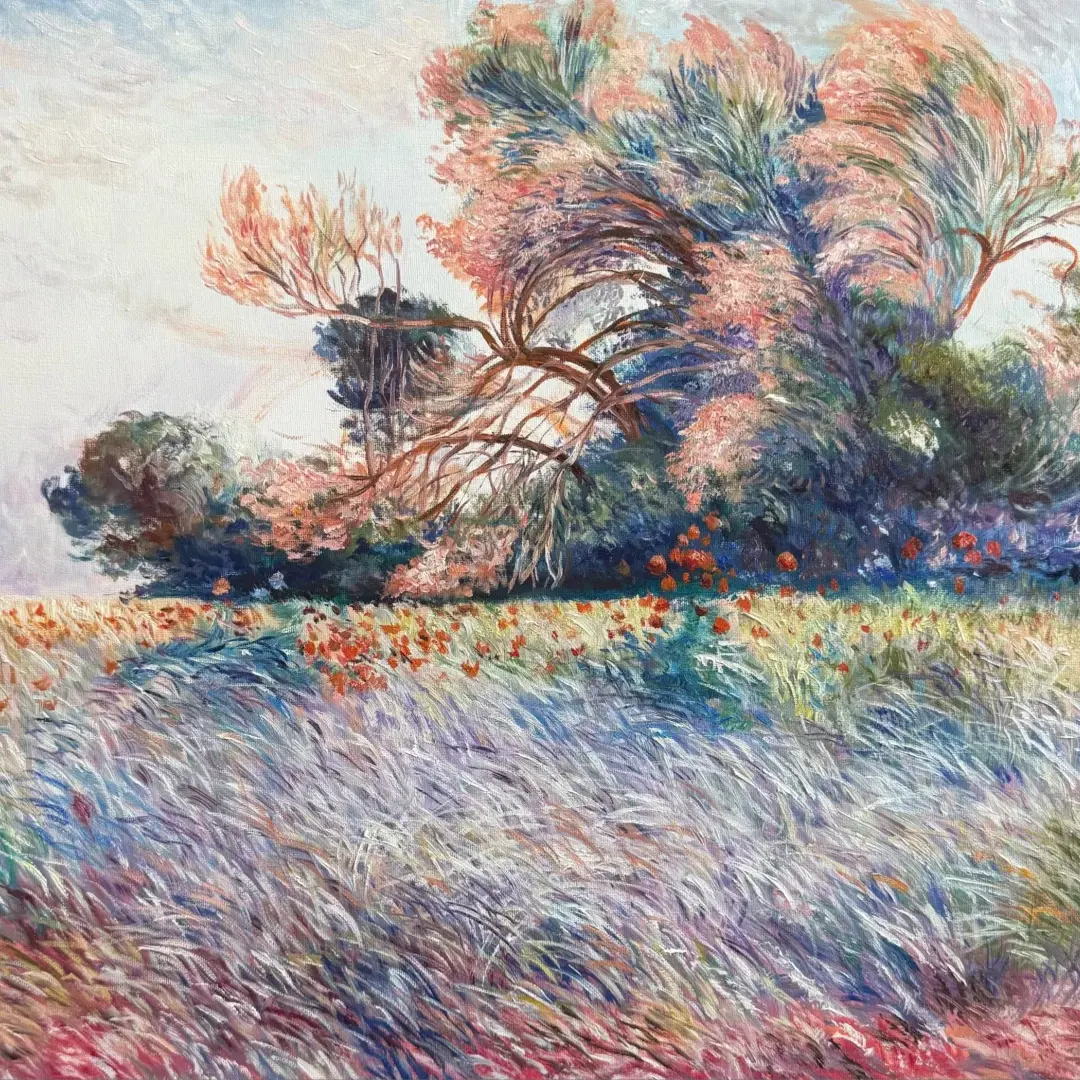
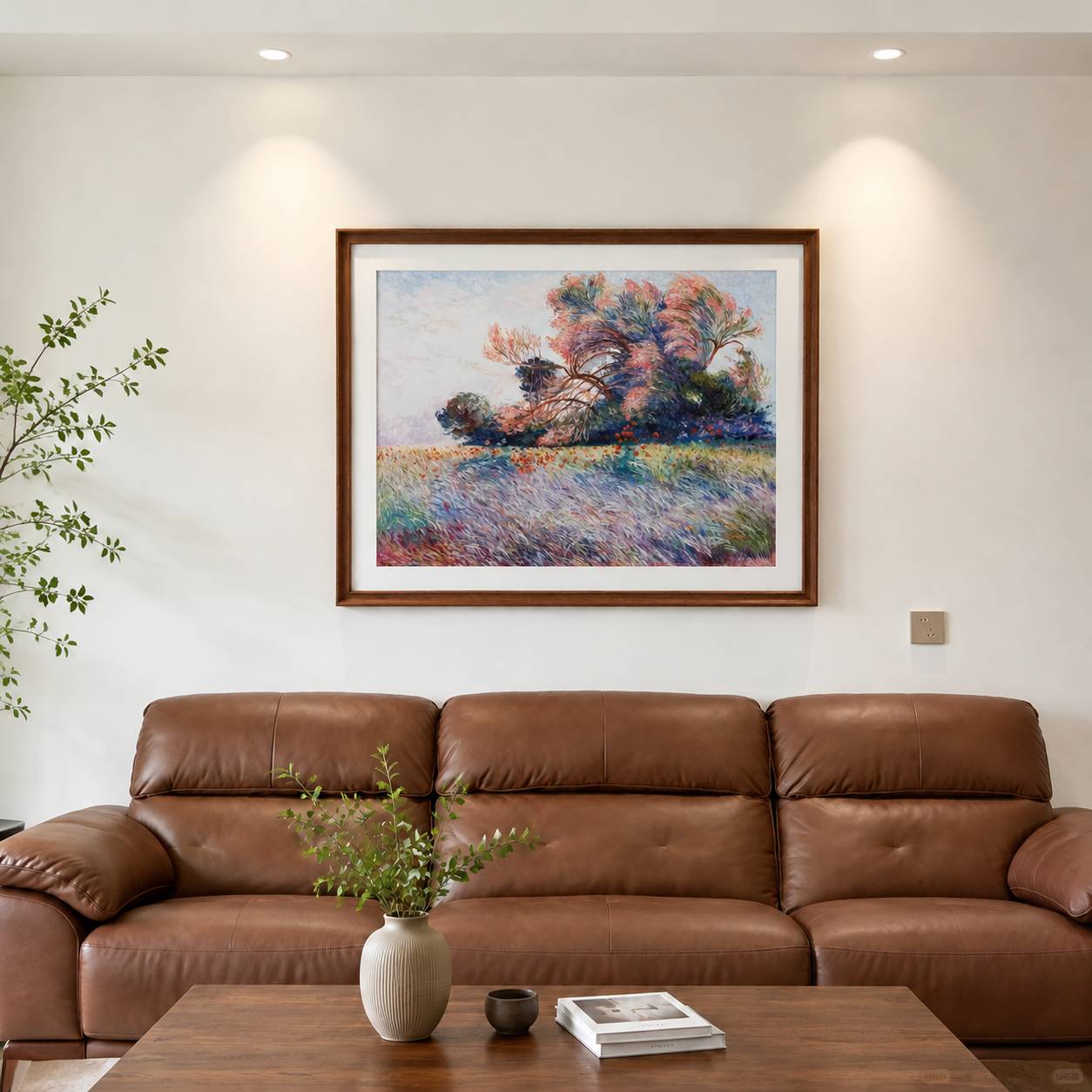
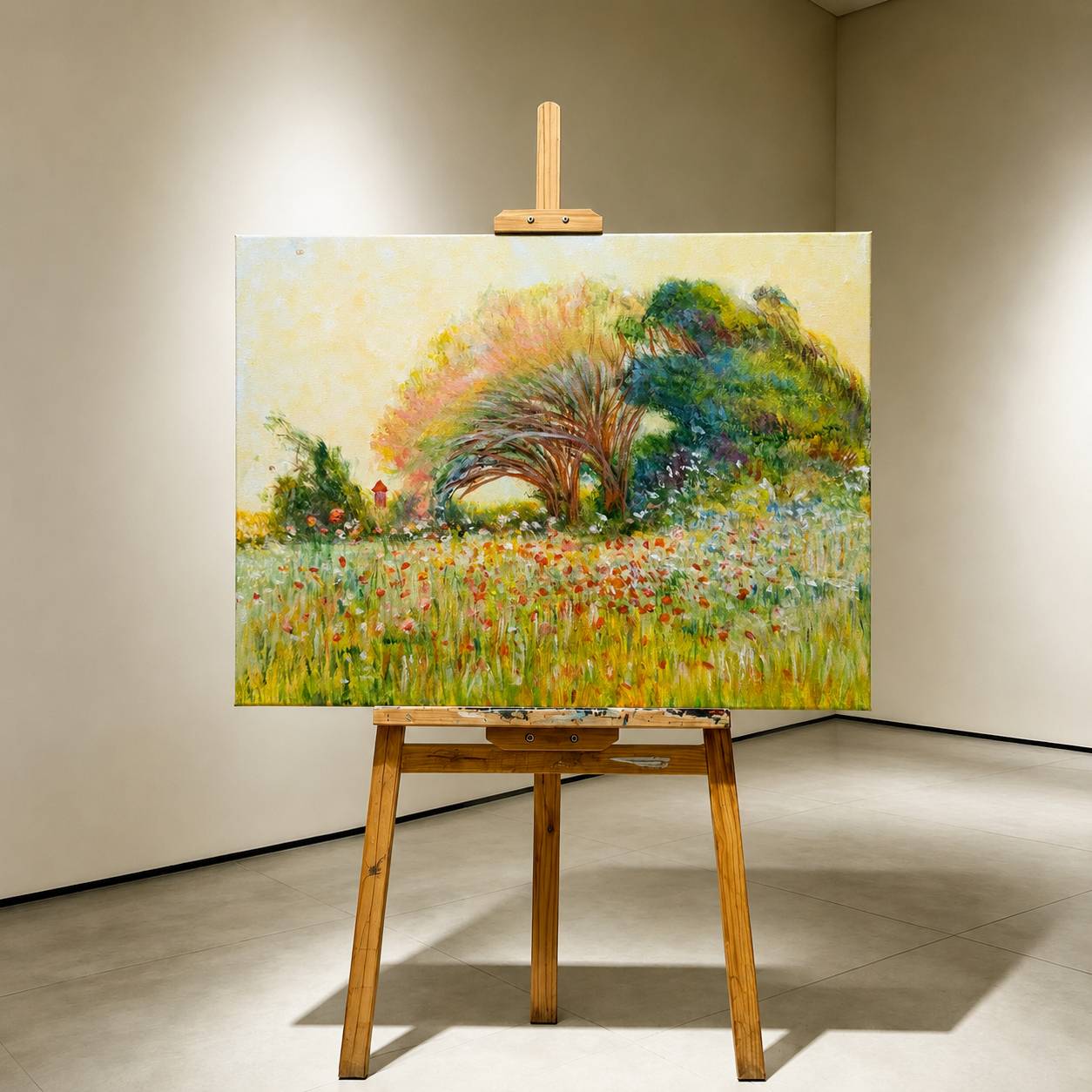
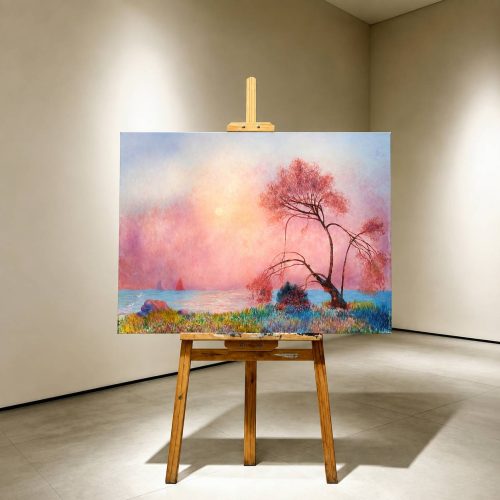
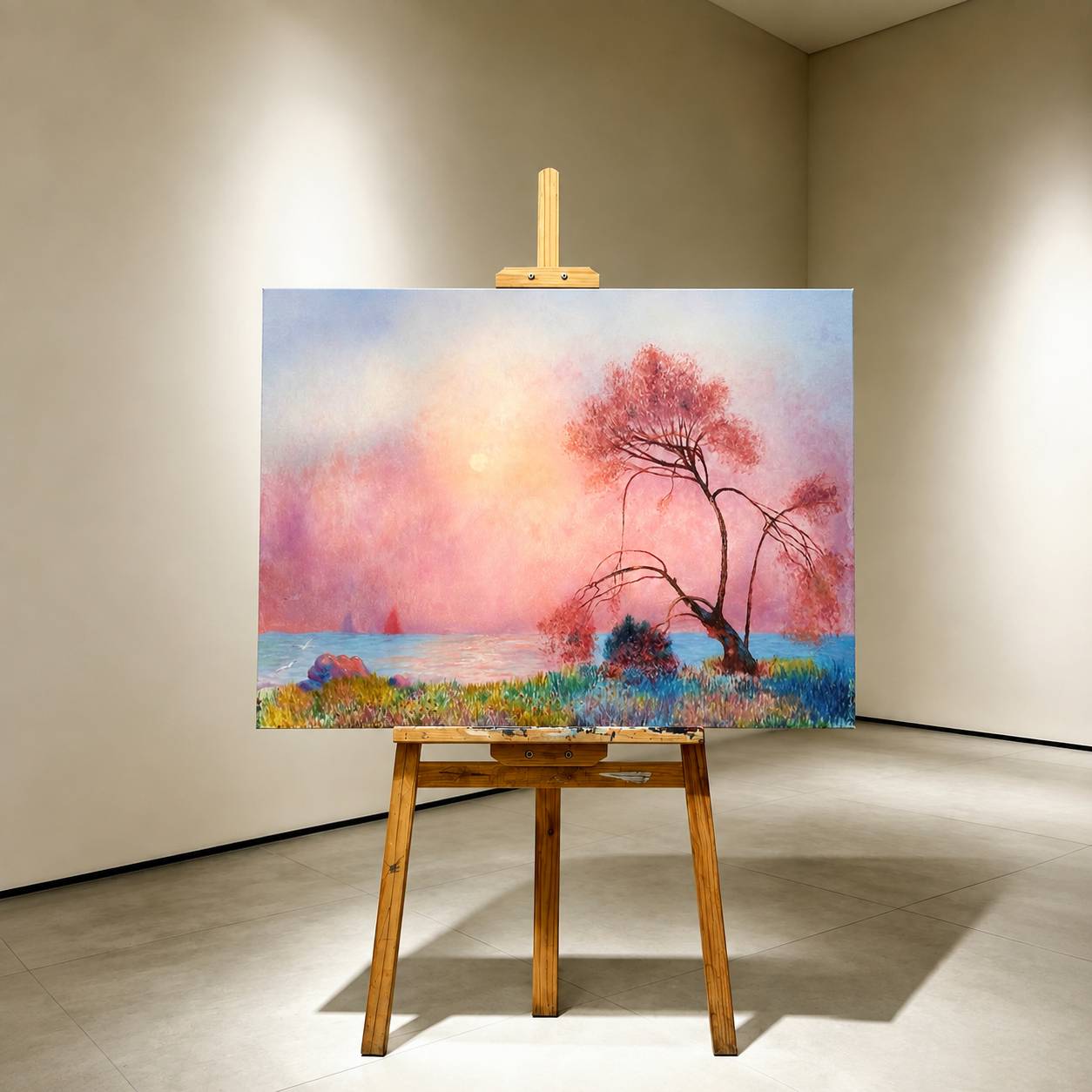
Original Title: Tamarisk and Field of Poppies
Artista original: Ferdinand du Puigaudeau (1864-1930)
# Agradecimiento
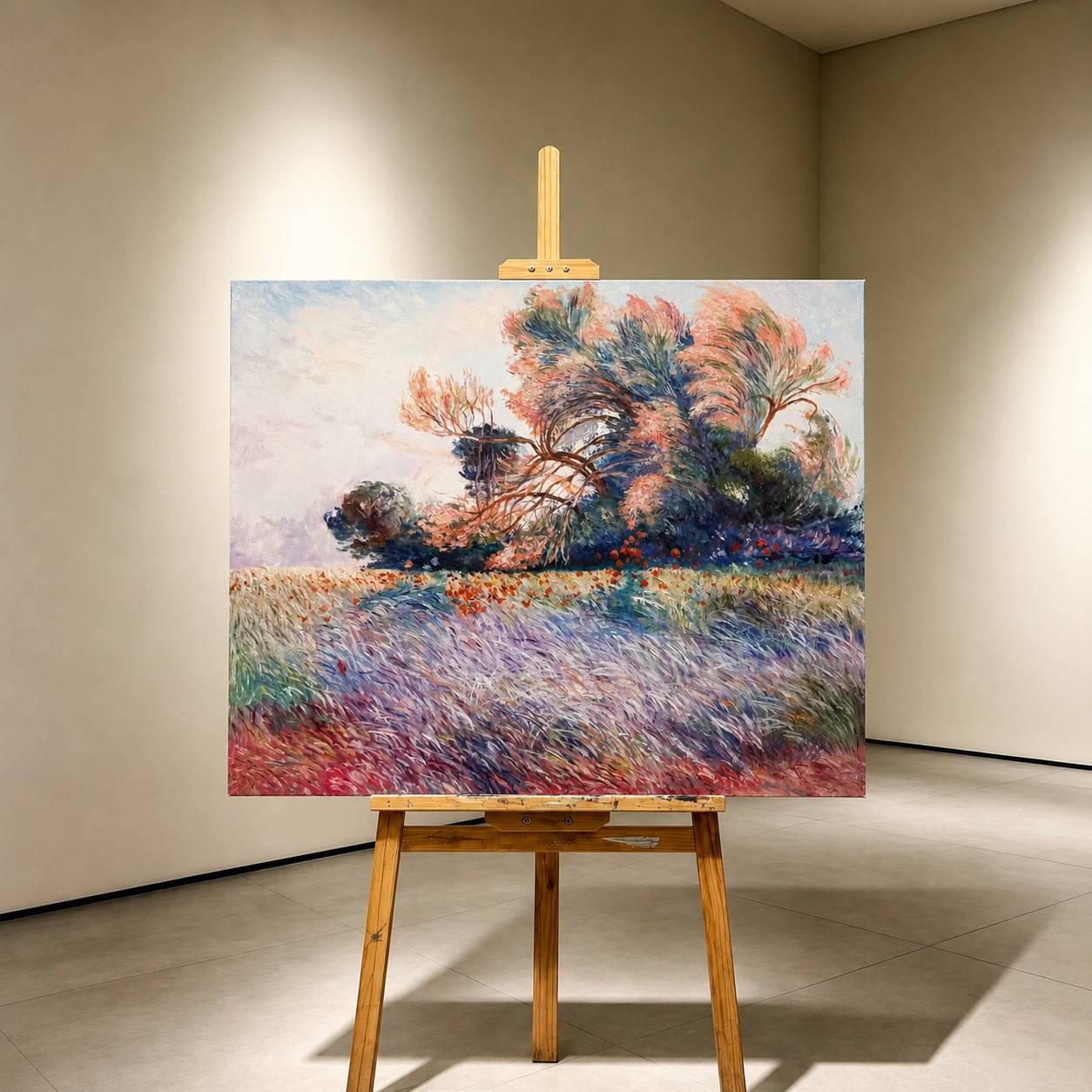
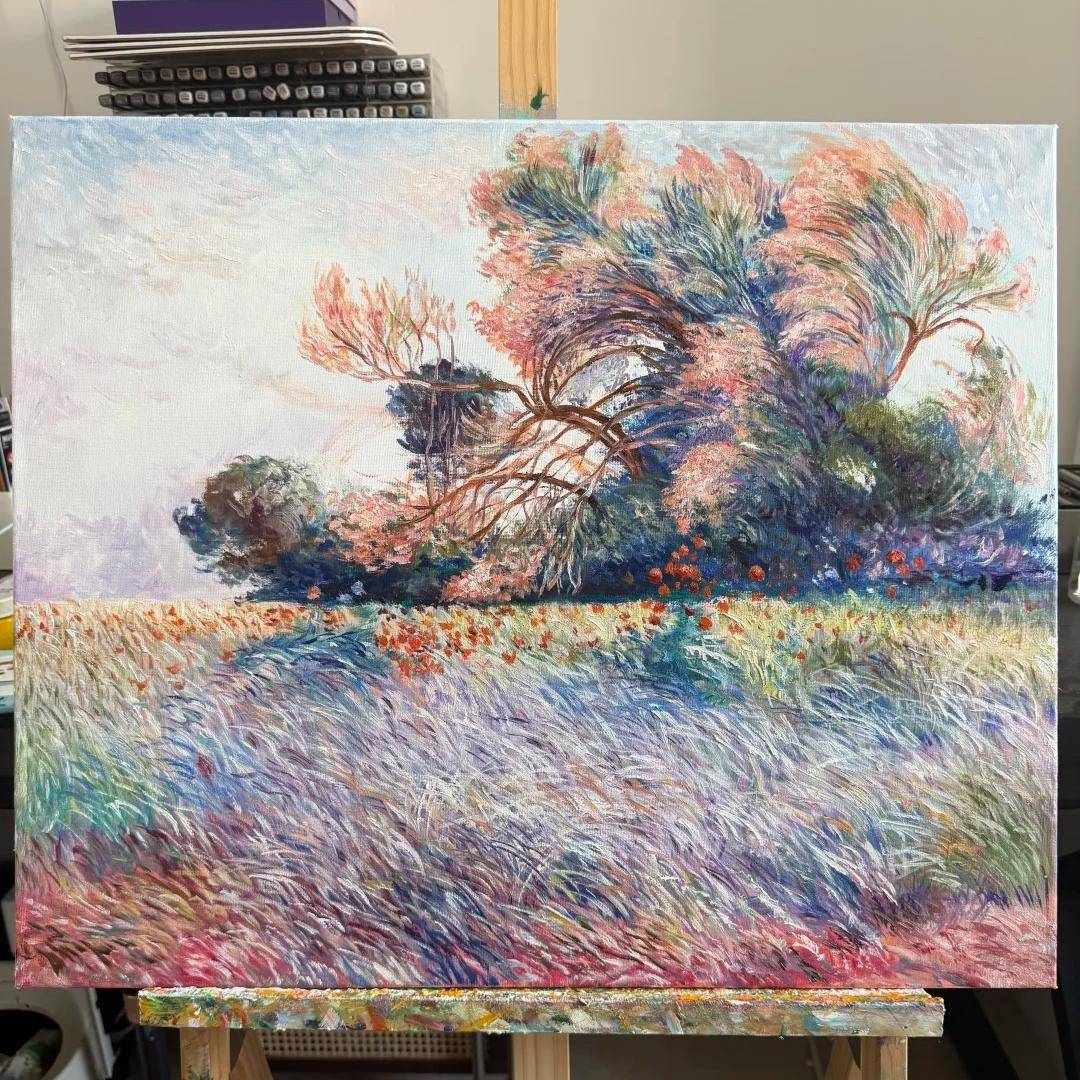
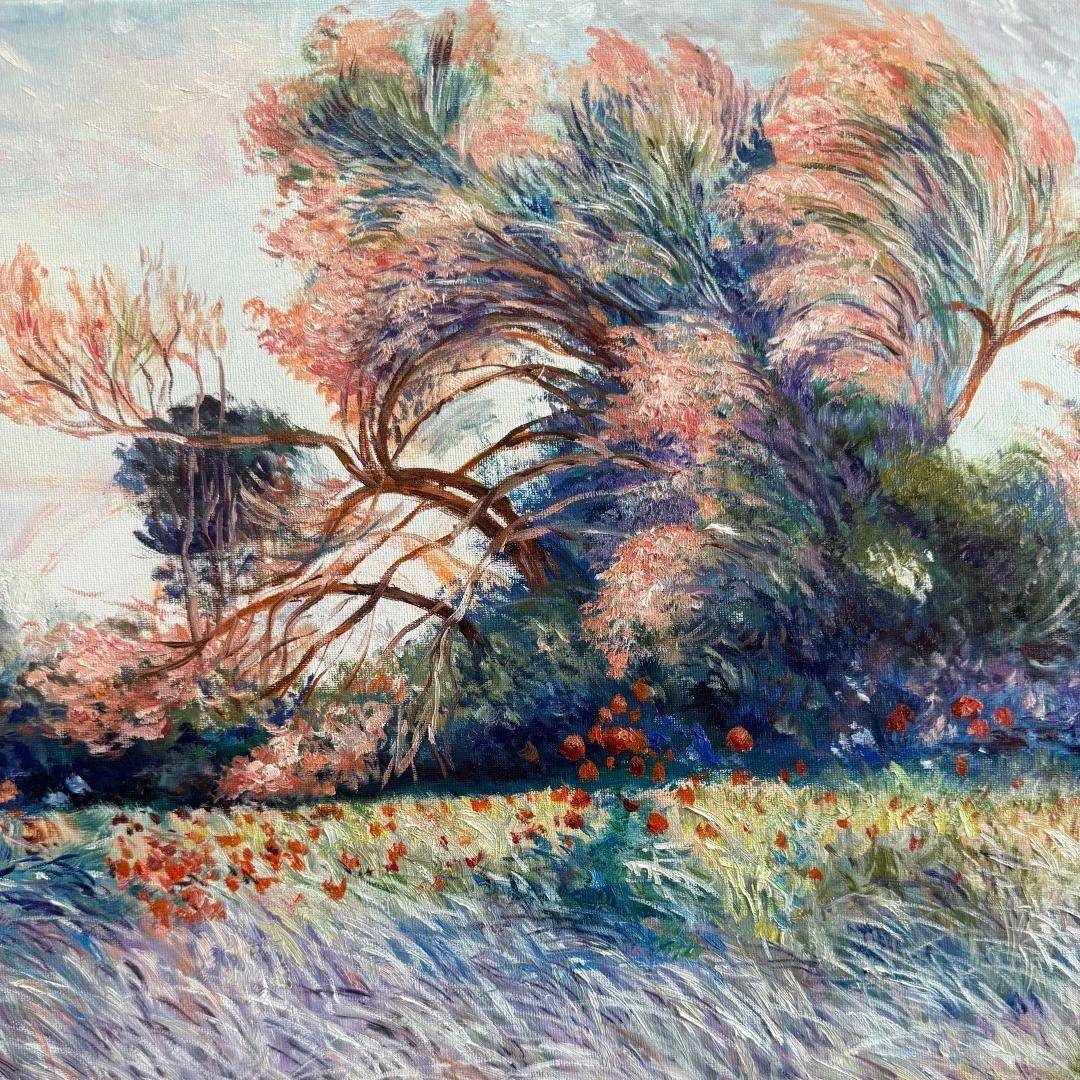
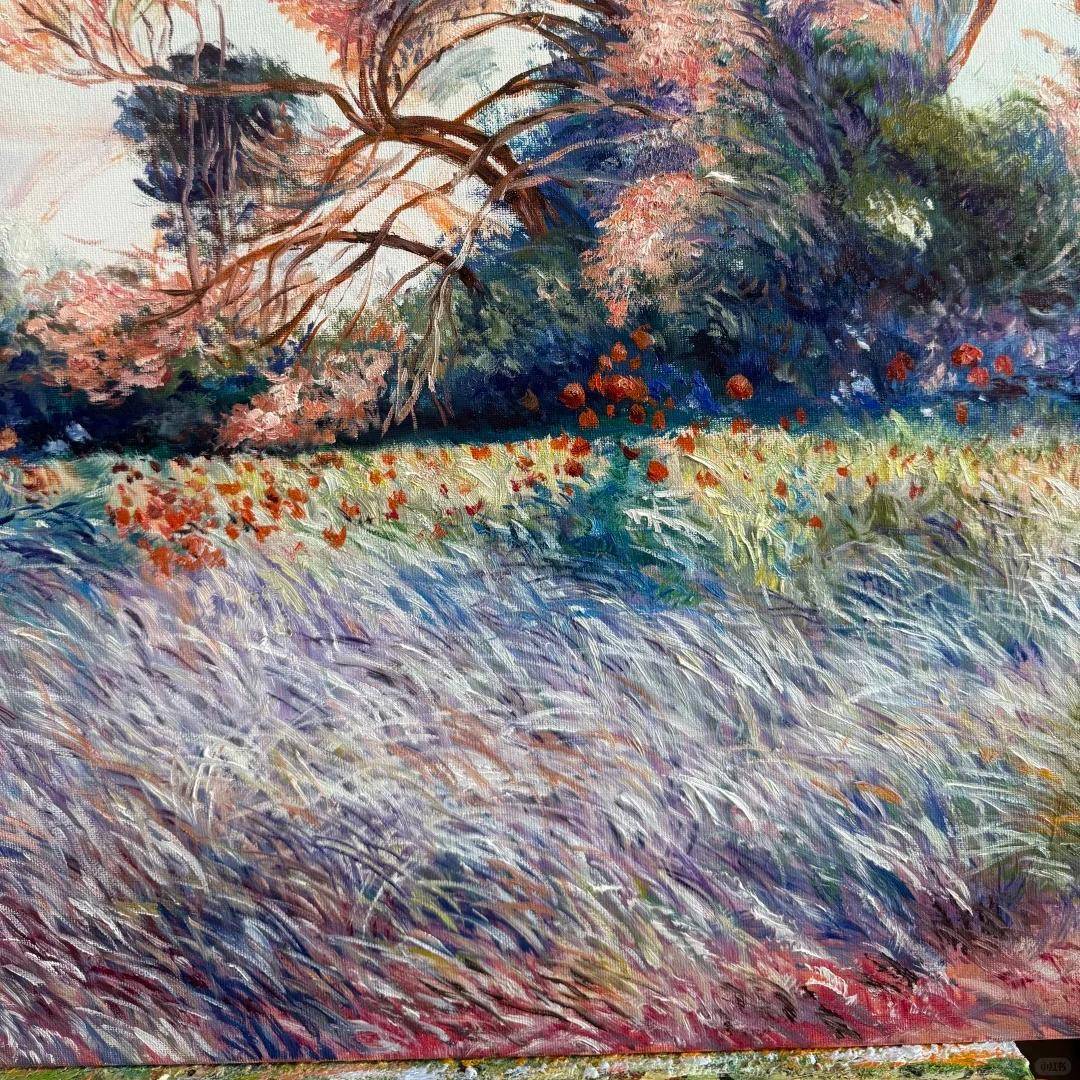
What is most enchanting about Tamarisk and Field of Poppies is that it paints the wind itself. On the right the tamarisk branches all lean to one side, pink and pale-red tips combed by the airflow, the curved brown trunks standing out sharply against the dense blue-green shadows, as if the whole tree were being pushed along by the sea wind. The line of poppies beneath it is the most restrained kind of revelry: scarlet dots trailing intermittently along a pale-yellow field ridge, sparse but just enough to lead the eye from the trees into the distance. The foreground grasses, occupying more than half the canvas, are laid in with short, skipping strokes, blue-green, grey-violet, pink and white weaving into a flowing wave that plays lightly against the still sky above. The composition is artless, the colour wonderfully alive – a very ‘present’ open-air sketch with an aftertaste of Impressionism.
# Sobre el artista
Ferdinand du Puigaudeau (1864-1930) fue uno de los principales pintores posimpresionistas franceses. En gran parte autodidacta, se inspiró profundamente en la luz del Mediterráneo. En 1886 se trasladó a la colonia de artistas de Pont-Aven, en Bretaña, donde entabló una estrecha amistad con Paul Gauguin, aunque nunca adoptó sin más la planitud del sintetismo. A lo largo de su vida se mantuvo fiel a los sutiles cambios de la luz del sol, el resplandor del atardecer, las noches de luna y la luz de las lámparas, lo que le valió la reputación de ’mago de la luz‘. A partir de 1907 se retiró con su familia a una finca en Le Croisic y, en la tranquilidad de sus últimos años —lejos del bullicio de París—, pintó los jardines, los campos de trigo y los pueblos que le rodeaban. Su actitud distante, casi de ermitaño, y su dominio absoluto del color le valieron la profunda admiración de Edgar Degas.
 English
 Chinese (China)
 Arabic
 German
 Japanese
 Korean
 French
 Spanish
 Italian
 Dutch
 Portuguese
 Polish
 Swedish
 Hebrew
 Turkish
 Danish
 Norwegian
 Finnish
 Czech
 Greek
 Hungarian
 Romanian
 Irish
 Estonian
 Latvian
 Lithuanian
 Slovak
 Slovenian
 Croatian
 Bulgarian
 Chinese (Taiwan)
 Chinese (Hong Kong)
Valoraciones
No hay valoraciones aún.